
Are modern nylons less durable than Vintage
Blue
2/20/20262 min read
People who have worn modern pantyhose and experienced a run before leaving home will ask this question. Vintage nylons have better durability than modern pantyhose because people used to wear them. The answer exists through the combination of historical fashion elements and textile science methods and changing consumer needs.
The Golden Age of Nylon: When Durability Was the Selling Point
The late 1930s and 1940s introduced nylon stockings which manufacturers promoted as a miracle fiber because it delivered strong and smooth and highly durable properties that surpassed silk. Early nylon hosiery used:
• Heavier in denier (often 30–60+)
• Knit more tightly
• Made with pure nylon yarns that prioritized strength over softness
• Designed to be repaired, not thrown away
Women owned only three pairs of hosiery and they expected all three to remain intact. Women regarded hosiery as expensive items which they would use for a long time.
The 1970s: The Turning Point That Changed Everything
Hosiery manufacturing and consumer behavior experienced their most substantial transformation during the 1970s. The 1970s established a new boundary which separated the two periods of fashion history known as "vintage durability" and "modern disposability."
Multiple important transformations occurred at the same time.
1. The Rise of Pantyhose
Miniskirts reached their maximum length because designers increased hemline heights which caused women to start wearing pantyhose instead of stockings. Pantyhose required:
• Much finer yarns
• More stretch
• More comfort-focused blends
The durability of the product decreased through this process.
2. Demand for Sheerness and Comfort
By the mid‑70s, consumers wanted hosiery that was:
• Ultra‑sheer
• Soft and silky
• Lightweight
• Affordable
Manufacturers responded by lowering denier counts and introducing spandex blends. The shift in priorities moved manufacturers to focus on product design elements instead of designing products that lasted longer.
3. Mass Production and Cost Pressure
The brands that made pantyhose into a common fashion item focused on production that was cheap, comfortable and had a finite longevity. Which assured them a quick turnover but also gave nylons their disposible reputation.
The Rise of Sustainable Fashion
The industry needs to change its current practices because of sustainability requirements. Durable hosiery means:
• Less waste
• Fewer replacements
• Better long-term value
Consumers recognize that products which cost low prices tend to have short life spans so they search for different products.
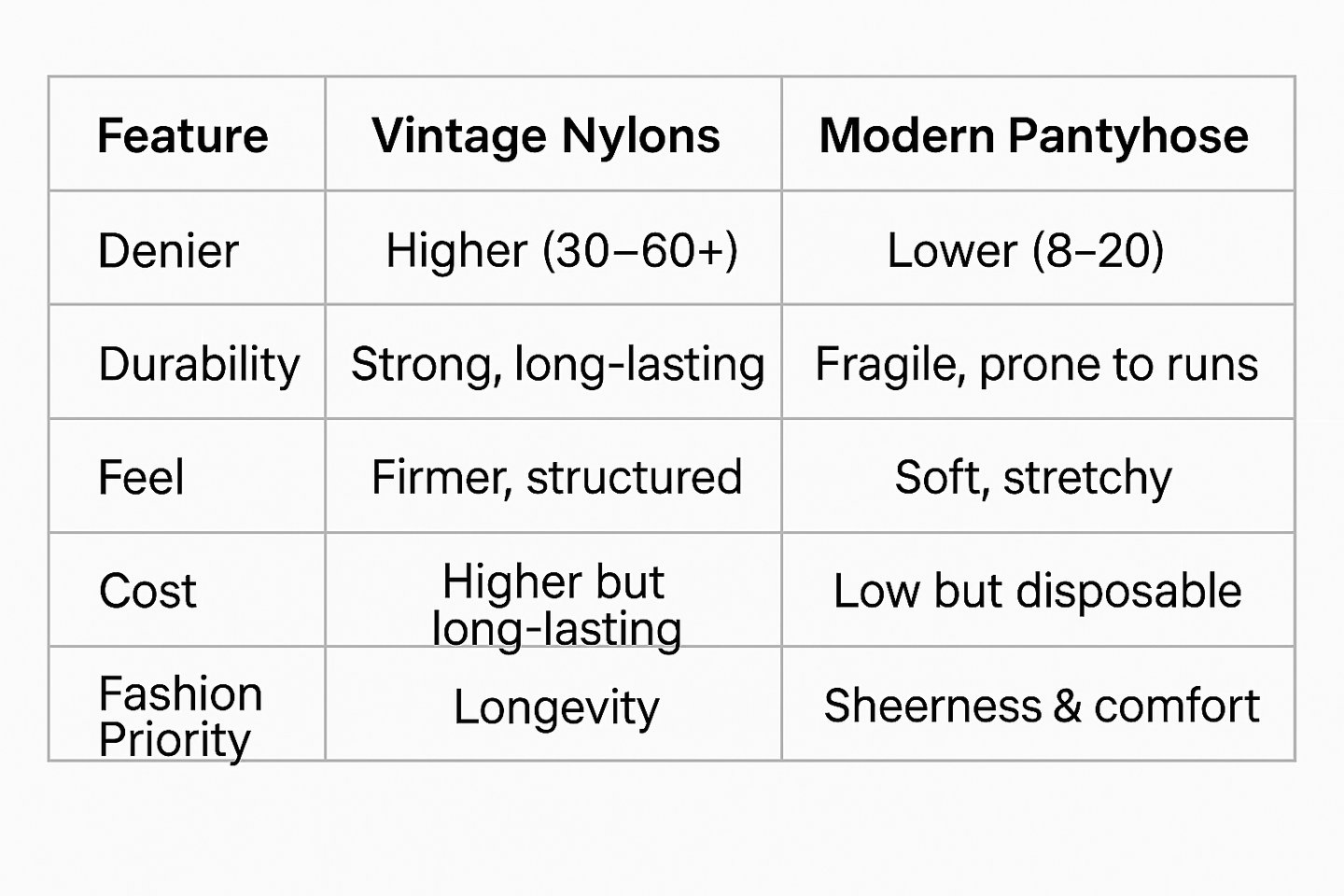
Vintage vs. Modern: A Quick Comparison
The Bottom Line
Modern pantyhose don’t provide inferior performance compared to older products because designers created them to meet different needs. The 1970s fashion revolution introduced people to hosiery products which replaced traditional durable clothing items with new lightweight transparent materials. But as consumers rediscover the value of quality the industry is slowly circling back toward more durable options.
The market finally responds to your need for hosiery which provides the same feeling as vintage pieces from previous decades.
Are Modern Pantyhose Less Durable Than Vintage Nylons
Contact
Questions? Reach out anytime!
Phone
hello@legwearlogic.com
+1-555-123-4567
© 2025. All rights reserved.